Happy Easter. The day started out good when I found some Easter goodies at my door. The Easter bunny had appeared at all the dorms and occupied rooms. It may sound funny but it was really special to find that at my door. It brought back many family memories of Easter morning.
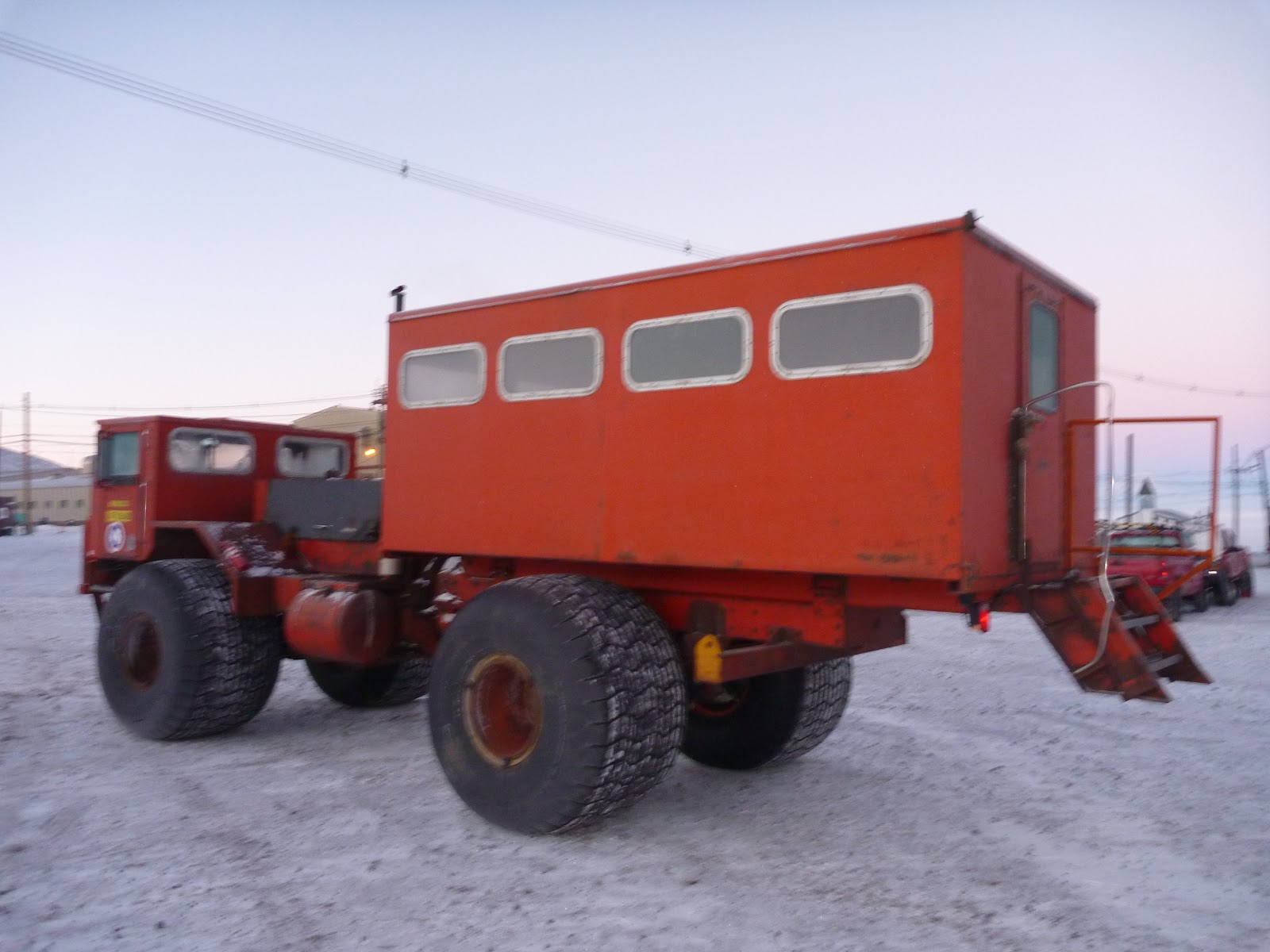
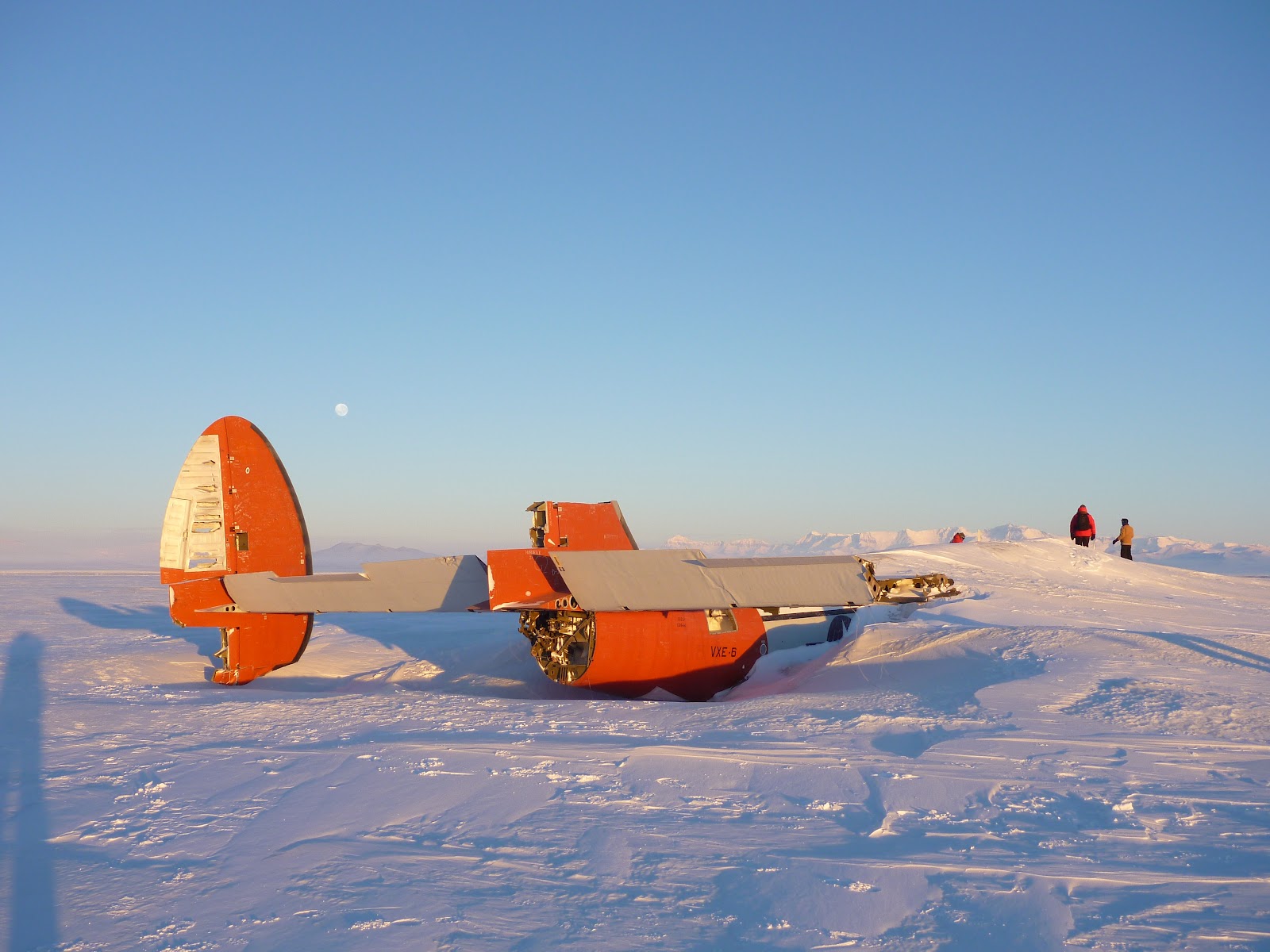
After breakfast I dressed in my best Easter outfit for a trip onto the Ross Ice Shelf to visit the Pegasus crash site of 1970. For those interested I have copied the last flight story. We were driven the 13 miles in an old navy Delta passenger vehicle. There were 10 of us in the back. The rear heater wasn't working so we pretty much froze during the bumpy one hour ride. A guy across from me has a thermometer on his jacket. It read -20 degrees. When we arrived at the site the trip leader said we will be here an hour or so. We all looked at him and said "Yeah...right." It was an absolutely beautiful day with no clouds or wind. Pegasus is mostly covered up after 40+ years of drifting snow. All of us wanted to take pictures and you can't do that with a glove on. Fortunately I was wearing my glove liners. The routine is to remove the right glove, take picture, put glove back on and put your hand into the parka pocket. After about 15 minutes of this I couldn't move my right hand anymore. I couldn't even get the glove on. So I went back to the Delta and climbed into the cab to thaw my hand. That wasn't working. The driver noticed my problem and applied a pair of gel hand-warmers to my liners and put my gloves back on. I climbed down from the cab and noticed everyone was loaded into the back already due to the cold. The trip leader said there was room for three in the cab for the return trip. After about 10 seconds I said I'm in since no one else called it.
After about 30 minutes I was able to use my camera again and took a few Ross Ice Shelf pictures and three videos from the cab. The ice is 100 feet thick here, almost to the sea bed. It was during this time I witnessed my first Fata Morgana and was amazed at this mirage. It is commonly seen in the polar regions over large sheets of ice. We were driving along and what appeared to be huge cliffs came crashing down like surf. I am sitting there staring at what looked like a huge storm headed our way. I asked the other guys in the cab, "Are you seeing that?" They said it was a Fata Morgana. It happened many times. You have to see it to believe it. The sun angle, brightness of the ice, and temperature have to be just right for this to occur.
After the pix there is a video that shows us driving by Observation Hill. I have also uploaded 2 more videos to youtube since they are too large for blogspot.
http://www.youtube.com/watch?v=kXl5InNFIlk&feature=youtu.be
This video shows us driving up the transition from the shelf ice to Ross Island.
http://www.youtube.com/watch?v=nhFc6nfNSAQ&feature=youtu.be
Driving back into town.
Here's a history of the plane crash at Pegasus
Runway. Enjoy!
THE LAST FLIGHT SOUTH
BY "PEGASUS" THE FLYING HORSE
Just before 9am on October 8, 1970 the C-121 Super
Constellation "Pegasus" of the United States Navy's VX-6 Squadron
departed from Christchurch Airport on a ten and a half hour flight to
Antarctica. The ill-fated aircraft ended her life in a tangled heap on the ice
of the Ross Sea. For the second navigator Robert O'Keefe the day is firmly
etched in his mind recalling the events leading to the crash twenty nine years
later.
By NOEL GILLESPIE
FREELANCE AVIATION WRITER
Edited by Ben
Bachelder
Freelance grammar
enforcer
Just before 9am on a cool dull Christchurch morning of
October 8 1970, Lt.Commander Cliff Greau, a veteran of two previous Antarctic
seasons, roared his C-121J Super Constellation ("Connie") into the
southern
skies. Appropriately named
"Pegasus"- the flying horse, this was her seventh year of Antarctic
operations.
Greau's mission was to open up Operation Deep Freeze
71-destination the ice runway William Field, McMurdo Sound, 4,500 miles away
over open frozen waters. A routine squadron's flight was to end in tragic
circumstances ten and a half hours later.
Half an hour out from McMurdo, the weather had
deteriorated to zero visibility in an intense storm, which had enveloped the
base. Low on fuel and no alternative airfield, Commander Greau had to possibly
crash land the aircraft. After making five attempts, he veered off to the right
side of the ice runway and the Connie was destroyed without loss of life.
Pegasus BuNo 131644, was the seventh aircraft of
VX-6Squadron, carrying a crew of 12 and 68 passengers including a technician
from Lockheed, the aircraft's manufacturer, plus cargo and mail for the
winter-over party. At midnight, the first aircraft away was another C-121J,
"Phoenix", followed by the five C-130 Hercules at one hour intervals.
The twelve-man crew included the commander, two
co-pilots, and two navigators, two flight engineers, a radio operator and two
load masters. The Connies required two navigators because the magnetic
compasses and gyros were not operational below 60 degrees south so celestial
navigation was required. Its main mission with VX-6 was moving personnel from
Christchurch to McMurdo and photo mapping the Antarctic continent.
The weather forecast for the McMurdo area was marginal as
a severe Antarctic storm was closing in. It had already caused a 24-hour holdup
on flights between Christchurch and McMurdo and had grounded interior flights
at McMurdo.
With the weather of paramount concern to the crew and no
alternate landing sites, their minds alert, the intrepid naval aviators kept
regular contact with oceanic control as Pegasus headed towards McMurdo center
control.
O'Keefe, a true naval aviator, was the aircraft's second
navigator. On his inaugural flight to the continent, he was unknowingly a
matter of hours away from the grim introduction to Antarctic flying.
Says Bob O'Keefe, "As we reached the Point of Safe
Return [PSR] at 4pm we had learned that the weather at McMurdo was
deteriorating rapidly and visibility at Williams Field was 10 miles with winds
of 13 mph, we commenced a conference. Lt. Commander Greau made the call to
continue the flight south"
"We really didn't discuss it much; everyone on the
flight deck had their own thoughts. We all said a silent prayer as thoughts
flashed back to home."
Between 6 and 7pm a snowstorm developed, visibility at
McMurdo was reduced to zero with winds gusting to 40 mph.
The Connie utilized a slightly longer route into McMurdo
than the Hercs because of the mountains on the continent and the Ross Sea
required approaching aircraft to stay above Mt. Erebus' elevation, then drop
rapidly for the approach to Williams Field. The C-121route required skirting
the Ross Sea and Beauford Island then proceeding straight into Willy Field
"I can remember being able to see [Outer] Williams
Field from about thirty miles out as we descended for our approach. The front
of the storm was like a great white impregnable wall just to the south of the
ice runway. We flew almost directly over the airfield buildings as we raced to
be at the storm, but we lost".
As the crew began to receive vectors from the radar
approach, they secured everything aboard the aircraft. The crew briefed the
passengers on evacuation procedures should the landing attempt be unsuccessful.
"We made six or seven ASD radar approaches. After
each abortive approach our flight engineer reported to the commander of our
fuel status and after the sixth approach the news we did not want to hear. Only
enough fuel for one more approach and fifteen minutes of holding remained until
they were completely out of fuel"
He tells of Cdr. Greau informing the crew that he was
descending to 100 feet on the next approach, and if Cdr. Avery, the first
pilot, could see any part of the runway, he should assume control of Pegasus
and land the old girl.
If they could not see the ice runway, they were to climb
to 500 feet and intercept the Precision Approach Radar Glide Path for the
skiway at Williams Field some twelve miles away, retract the wheels for a
wheels up landing on the skiway normally used by the ski-equipped C-130's, as
there was not enough fuel for an another approach.
"We began with a certain apprehension, the
adrenaline was now pumping and I had responsibilities to carry out in an
emergency. We all tightened our seat belts a little tighter and made sure that
there was nothing in our shirt pockets to scratch our faces"
Cdr. Avery caught a glimpse of the runway at about
100feet above the ice and called for Control of the aircraft.
"I can remember vividly that he had completely idled
the engines and dived for the ice runway. We landed very hard but would
probably have suffered little or no damaged had several frozen snow drifts not
formed on the runway while we were making our first approach."
Such was the force of the Antarctic storm. Unlike the
Hercules, the Connie did not have skis touching down on the ice; the Connie used
wheels on high struts. Immediately on
hitting the ice, Cdr. Avery placed all four engines into full reverse, just as
the right main gear impacted the snowdrift. This caused the aircraft to veer
rapidly to the right and turned about 210 degrees clockwise and slide backwards
to the right of the runway.
O'Keefe recalls the right wing tip contacting the ice as
it slid backwards. "I remember watching with absolute horror, the No. 4 propeller
spinning off the engine. Moments later No. 4 engine ripped off its mount as if
by some giant hand, followed by No. 3 propeller then No. 3 engine then the
entire right wing. While I recall it in slow motion, I doubt that the whole
chain of events took more than a few seconds."
When the Connie finally stopped sliding, the two left
engines were still running at full power in reverse, as the control cables from
the flight deck had been severed. At this point Cdr. Greau switched off the
magnetos to secure engines.
When the main landing gear ran into a massive snowdrift, it
twisted and sheared off just below its pivot point inside the gear well. Pegasus now straddled a three to four foot
high and eight-foot wide snowdrift between the nose and main landing gears.
"A very eerie temporary silence ensured,"
recalls Bob O'Keefe. "Hardly a word was spoken on the flight deck. Seconds
later we started a rapid evacuation on the left side of the aircraft, putting
all our endless hours of emergency training to work"
At 8.10pm the Connie finally slid to a stop on the frozen
ice surface. It was only a half a mile from the aircraft parking and cargo
staging area, but it took over three hours for anyone to locate the crashed
aircraft.
Five onboard were injured, suffering from scalp
lacerations, bruises and back strain. "The OIC (Office In Command) of the
VX-6 winter over party, Lt. Ken Koening, was at the runway awaiting our arrival
from Christchurch, with a large military terrain stake bed truck with a canvas
top. This 'bus' was for transportation between McMurdo and the ice runway at [Outer]
Willy Field."
Evacuating the crew and passengers was made via the left
main and forward crew cargo doors. As the rest of the crew assembled the
passengers away from the aircraft, one of the loadmasters stayed behind with
O'Keefe to get as much as possible of the aircraft's emergency equipment
unloaded as possible, as fear of fire breaking out was uppermost on their
minds.
"We were able to off load all the equipment, which
included several tents, which we felt could shield the passengers and crew from
the now extreme wind, blistering snow and severe wind chill factor, by now
affecting us all" recall O'Keefe With a 50-mph wind blowing across the
ice, it was impossible for the crew to erect the tents. As half the passengers
were not properly dressed, we considered they would be better off inside the
Connie". With no fuel, likelihood
of fire was low and they would be out of the freezing wind and 50 plus below
zero temperatures.
"The GCA radar crew at Willy Field was frantically
working with Lt. Ken Koening, to locate us and get us to safety and some
shelter. Ken had a radar reflector on the top of a four wheel drive vehicle and
was able to talk to radar operators via a radio in his truck."
The radar operator could see the Connie on his screen and
directed Lt. Koening towards the crashed aircraft. By this time, the visibility
was less than 50 feet, with the snow now driving harder, nothing could be heard
for more than a few feet away.
"Driving to within a couple of hundred feet from us,
he could neither see nor hear us, or we him," O'Keefe recalled. When
he finally discovered our position, he radioed our status to the radar
operators back at Williams Field. They then radioed the information to the
squadron on the hill, while a support worker the OIC had brought with him
walked behind the truck, planting flag poles, to which he attached a rope and
flags."
This operation took him over 30 minutes to get back to
the staging area and then drive the truck to the crash site to evacuate the
first of the passengers along with the injured crew.
"I couldn't believe that it took so long to locate
us. After a couple of hours, the numbing cold began to work its will on us. We
were just concentrating on staying alive," O'Keefe said.
O'Keefe recalls he was the last of the crew and
passengers to leave the accident scene and be transported to the staging area before
being transferred into heated buses for a ride up the hill to MacTown.
"The harsh Antarctic storm lasted until the
following day. By then I was finally able to get down to view my beloved
Pegasus. The snow had drifted up against
the left side, almost to the top of the fuselage. The main landing gear was
still sticking straight up out of the snowdrift, which had ripped off the
aircraft. One could literally follow the trail of parts that had been ripped
off as we slid backwards down the ice runway"
Rear Admiral D F Welch said that at the time, the crash
was too close to the [still active] runway and it wasn't good morale to have a
broken C-121 with only one wing lying about.
It was subsequently moved to its current location.
Bob O'Keefe remained with VX-6 in Antarctica until March
1973. Earlier this year he attended the decommissioning of the Squadron at
Point Mugu Naval Air Station. While over 1600 former VX-6ers were there, the
only member of the crew of that flight was the 2nd Engineer Don
Bentley, now retired and living in Texas.
Mr. O’Keefe is now a tax consultant in Scottsdale and flies for a
regional airline USAIRWAYS Express.
Another C-121 crashed at McMurdo on October 31, 1961,
when a specially configured Super Constellation, previously used in Project
Magnet, landed a hundred yards short of the ice runway. It bounced and landed
50 yards further down the Ross Sea ice approach to the airfield. Its landing
gear collapsed as it veered into a snow bank, tearing off one wing and breaking
the fuselage behind the wing. Only one of the 23 men aboard was injured.
=
From: Billy Baker
When I flew to the ice in Oct 70, the squadron flew all
of its aircraft in on Opening Day. Dave Eldridge was the CO. The Connies
took off first and I think the Hercs were launched an hour of so apart. I
was on the second connie. All the Hercs got to the ice first and the other
Connie crashed upon landing. I have a bunch of photos that I took of the
crash and I will try to find and scan them and send them to you.
Cheers!
RMC Billy-Ace Baker, USN (Ret), OAE, OBM, DKS, LSMFT
W0 DF-63, 67, 71 & 75
Summer Support DF-74 through DF-80
 |
| Saturday's sunset. |
 |
| There must be an Easter bunny in Antarctica. |
 |
| Dressed in my Easter outfit! |
 |
| An old navy Delta passenger vehicle. |
 |
| The ride reminds me of Disneyland's Mr. Toad's wild ride! |
 |
| I now wear the traction device shown on the bottom. |
 |
| Loading up. |
 |
| The smile went away as soon as the cold soak set in. I love this place. |
 |
| Sunrise seen from a Delta window. |
 |
| Sunrise with Mt. Erebus on the left. |
 |
| Mt. Erebus as seen from the 100 foot thick Ross Ice Shelf |
 |
| What's left of the Pegasus tail. |
 |
| It was too cold to add our signatures. |
 |
| You can walk along the top. |
 |
| Heading back to town. |
 |
| Start of the transition from the ice shelf to Ross Island. |